A deck is one of the most valuable outdoor structures in a home, providing space for relaxation, entertainment, and outdoor living. However, because decks are constantly exposed to weather conditions, moisture, sunlight, and daily foot traffic, they gradually develop wear and tear. Over time, even a well-built deck can experience structural and surface-level damage that requires repair.
Understanding common deck repair issues is essential for maintaining safety, extending lifespan, and preventing costly replacements. Most deck problems begin small but worsen quickly if ignored. From rotting wood to unstable railings, early identification can save significant time and money.
This article explains the most common deck repair issues in detail, their causes, warning signs, and practical solutions, along with preventive maintenance strategies to keep your deck strong and durable for years.
Understanding Why Deck Damage Happens
Deck deterioration is a natural process influenced by multiple environmental and structural factors. Most issues arise due to prolonged exposure to moisture, ultraviolet rays, temperature fluctuations, and lack of maintenance.
Wooden decks are particularly vulnerable because they are porous and absorb water. When moisture enters the wood and does not dry properly, it creates conditions for rot, mold, and fungal growth. Composite decks are more resistant but can still experience surface wear, discoloration, and fastener issues. Metal components, such as nails, screws, and brackets, are also prone to rust and corrosion over time.
Another major factor is structural stress. Continuous load from furniture, people, and movement can loosen connections and weaken support systems. Poor initial installation or low-quality materials can also accelerate deterioration.
Understanding these root causes helps homeowners take proactive measures before damage becomes severe.
Common Deck Repair Issues
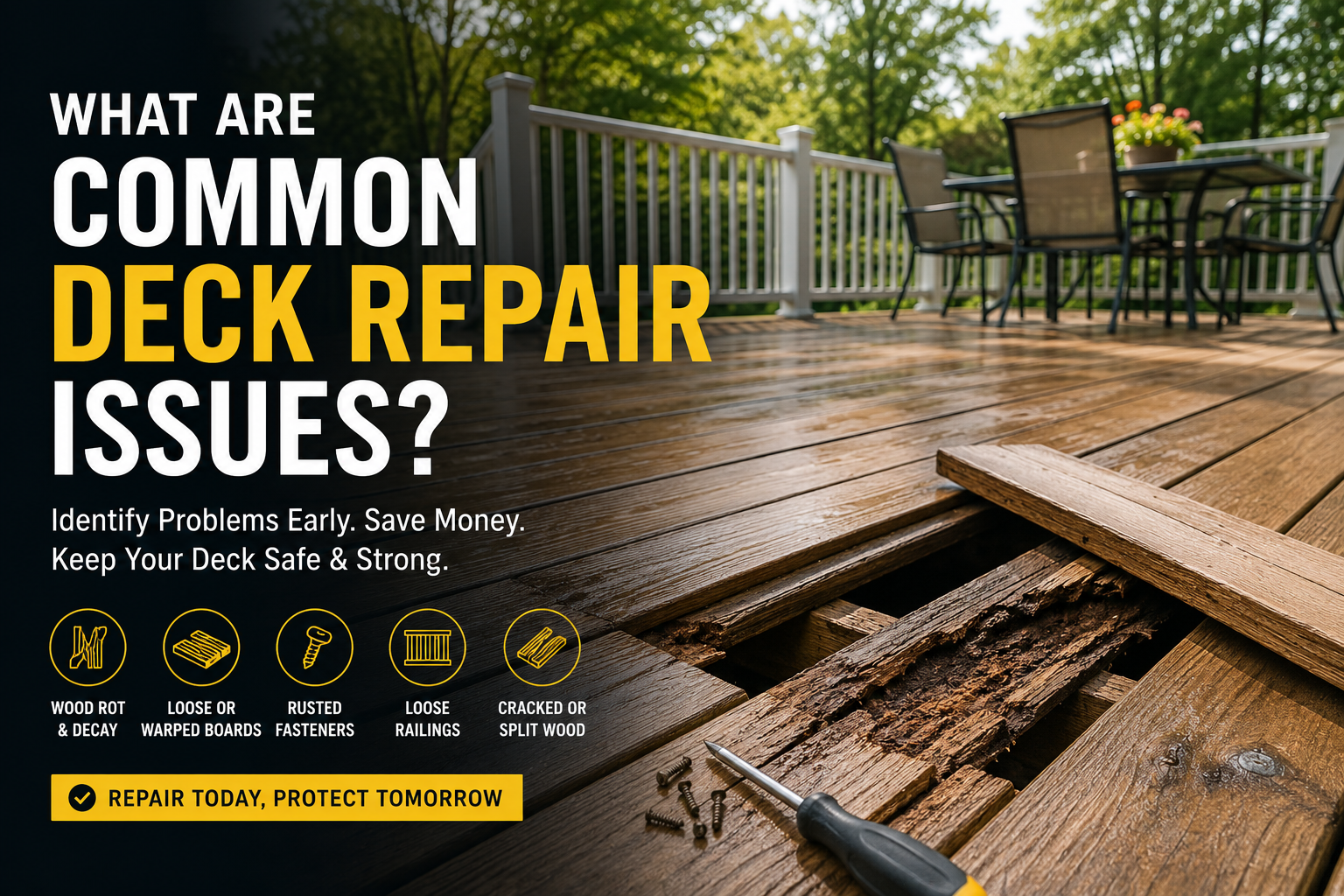
1. Wood Rot and Decay
One of the most serious and frequent deck problems is wood rot. It occurs when moisture penetrates wood fibers and promotes fungal growth, leading to soft, weakened, and crumbly boards.
Rot commonly affects areas that stay damp for long periods, such as deck posts, joists, stairs, and boards near the ground. Poor drainage and lack of sealing significantly increase the risk.
Signs of wood rot include soft spots, discoloration, musty odor, and crumbling wood when touched. In advanced cases, the structural integrity of the deck may be compromised.
Repair typically involves removing and replacing affected boards or structural members. In early stages, epoxy wood fillers may be used, but severely rotted sections should always be replaced to ensure safety.
2. Loose or Warped Deck Boards
Deck boards can become loose or warped due to moisture absorption, drying cycles, and temperature changes. Wood naturally expands when wet and contracts when dry, which leads to twisting, cupping, or lifting over time.
Loose boards create tripping hazards and reduce the stability of the walking surface. Warped boards also affect the aesthetic appearance of the deck and can trap water, accelerating further damage.
Repair involves re-fastening loose boards or replacing severely warped ones. In some cases, sanding or planing may help restore surface evenness, but replacement is often the more durable solution.
3. Rusted or Corroded Fasteners
Fasteners such as nails, screws, bolts, and metal connectors play a crucial role in holding a deck together. Over time, exposure to moisture and air leads to rust and corrosion, especially in older decks that were built with non-galvanized materials.
Corroded fasteners weaken the structural integrity of the deck and may cause boards or railings to loosen. In severe cases, entire sections of the deck can become unstable.
Modern repairs typically involve replacing old fasteners with galvanized or stainless-steel hardware, which offers better resistance to rust and extends the life of the structure.
4. Loose or Unstable Railings
Deck railings are critical for safety, especially in elevated decks. Loose railings are often caused by weakened fasteners, wood decay, or shifting structural supports.
A wobbly railing is a major safety hazard as it increases the risk of falls. This issue is commonly found at connection points where rail posts meet the deck frame.
Repair involves tightening or replacing fasteners, reinforcing posts, and in some cases replacing entire railing sections. Ensuring railings are securely anchored to the deck frame is essential for long-term safety.
5. Cracked or Split Wood
Wood cracking and splitting is a natural result of drying, aging, and exposure to sunlight. UV rays break down wood fibers over time, while moisture fluctuations cause internal stress.
Surface cracks may appear minor, but deeper splits can weaken boards and reduce load-bearing capacity. Heavy furniture or concentrated weight can worsen the issue.
Small cracks can sometimes be repaired using wood fillers or epoxy resins. However, larger splits usually require board replacement to maintain structural safety.
6. Foundation and Structural Problems
The foundation is the most critical part of any deck system. Problems in this area can lead to serious safety risks and costly repairs.
Common foundation issues include shifting posts, sinking footings, and unstable support beams. These problems often occur due to poor soil conditions, water erosion, or improper installation.
Warning signs include uneven deck surfaces, visible tilting, or gaps between boards and support structures.
Structural repairs may involve reinforcing footings, replacing support posts, or stabilizing beams. In severe cases, partial or full reconstruction may be necessary.
7. Mold, Mildew, and Algae Growth
Moist environments encourage the growth of mold, mildew, and algae on deck surfaces. These biological contaminants not only affect appearance but also create slippery and unsafe walking conditions.
Shaded areas and poorly ventilated sections are more prone to growth. Organic debris such as leaves can also trap moisture and accelerate the problem.
Cleaning with specialized deck cleaners or mild bleach solutions can remove surface growth. Preventive measures include regular washing, improving drainage, and sealing the deck surface.
8. Peeling Stain, Paint, or Sealant Failure
Protective coatings such as paint, stain, and sealant degrade over time due to UV exposure, moisture, and wear. Once the protective layer breaks down, the underlying wood becomes exposed to damage.
Signs include peeling, fading, and uneven coloration. Without protection, wood becomes more vulnerable to cracking, rot, and insect damage.
Repair involves stripping old coatings, sanding the surface, and applying a new protective layer. Regular resealing is one of the most effective ways to extend deck lifespan.
Safety Risks of Ignoring Deck Repairs
Ignoring deck issues can lead to serious safety hazards. Loose boards can cause tripping, while weakened railings increase fall risks. Structural damage may result in partial or complete deck collapse.
Moisture-related damage can also create hidden weak points that are not immediately visible. This makes regular inspection essential for preventing accidents.
Homeowners should inspect their decks at least twice a year, especially before and after extreme weather seasons.
DIY Repairs vs Professional Deck Repair Services
Some minor deck repairs can be handled by homeowners, such as tightening screws, cleaning surfaces, or replacing a single board. However, more complex issues require professional expertise.
Structural problems, foundation damage, and extensive rot should always be handled by professionals to ensure safety and compliance with building standards.
While DIY repairs may reduce short-term costs, improper fixes can lead to higher long-term expenses if issues worsen.
Preventive Maintenance for Deck Longevity
Preventive maintenance is the key to avoiding major deck repairs. Regular care significantly extends the lifespan of any deck structure.
Important maintenance practices include:
- Regular cleaning to remove dirt and debris
- Annual sealing or staining to protect wood
- Inspecting fasteners and tightening loose connections
- Ensuring proper drainage to prevent water buildup
- Trimming nearby vegetation to improve airflow
- Checking for early signs of rot or cracking
Seasonal maintenance is especially important. Spring and fall are ideal times for deep inspection and repairs.
Cost Factors in Deck Repairs
The cost of deck repair varies depending on the severity of damage, materials used, and labor requirements. Minor repairs like replacing boards or fasteners are relatively inexpensive.
However, structural repairs, foundation work, or full deck restoration can be significantly more costly. Material quality also impacts pricing, with hardwood and composite materials being more expensive than softwood.
Regular maintenance helps reduce long-term repair costs by preventing major damage.
Conclusion
Deck repair issues are common but manageable when identified early. Problems such as wood rot, loose boards, rusted fasteners, unstable railings, and foundation damage can all compromise safety and functionality if ignored.
Understanding these issues and taking preventive action is the best way to maintain a strong and durable outdoor space. Regular inspections, timely repairs, and proper maintenance ensure that your deck remaains safe, attractive, and long-lasting for years.
A well-maintained deck not only enhances property value but also provides a reliable space for outdoor living and enjoyment.